Sump Pump Installation in Gibsonburg, Ohio
Much of northwest Ohio is flat, so rain and snowmelt have few places to run off and tend to sit against foundations. In a Gibsonburg basement, a sump pump is what keeps that water from rising through the floor. It sits in a pit at the lowest point of the basement and pumps water out whenever the level climbs.
A pump that's the wrong size or draining beside the house fails when you need it most. Sump pump installation covers the pit, the pump, the check valve, and the discharge line that carries water outside. If your basement has no pump yet or the old one is struggling, call and talk through what you're seeing.
Signs You Need a Sump Pump or a Replacement
Water on the floor after a storm, with no pump in place, is the clearest case. Water finds the lowest spot, and without a pit to collect it, the water spreads across the slab and soaks whatever sits there.
For homes that already have a pump, listen and look. A pump that runs nonstop during a rain or cycles every few seconds is working too hard. A pump that rattles or grinds is wearing out, and a pump that stays silent while water stands in the pit may have a stuck float switch.
Check the pit too. Silt or sludge at the bottom can jam the float, and water standing near the top of the pit means the pump can't keep up. Replacing an aging pump before a storm beats finding out during one.
How a Sump Pump Gets Installed
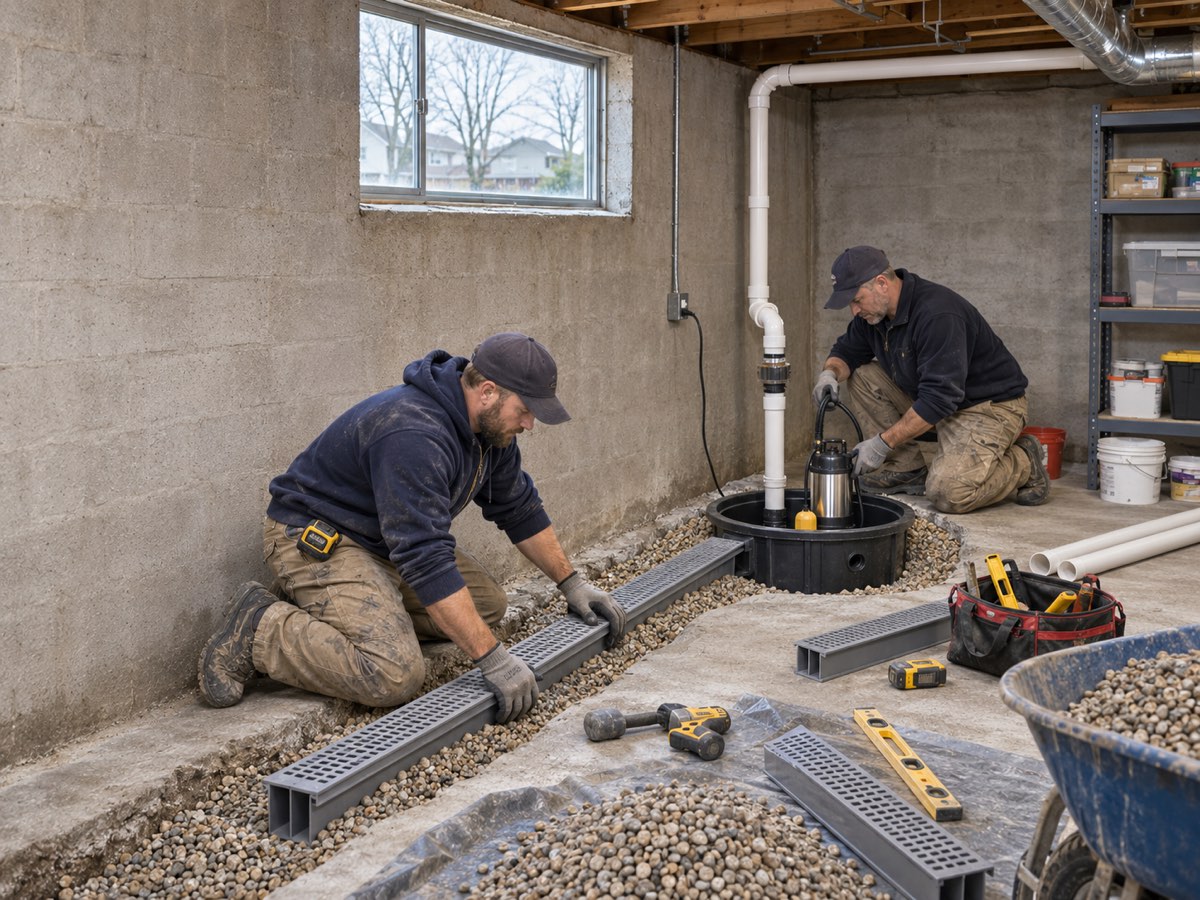
If there's no pit, the installer breaks out a section of concrete floor at the low point, digs a hole, and sets a liner basin in it, often with gravel underneath. A lid on the basin keeps moisture and odors out of the basement air.
The pump goes into the basin. A submersible sits in the water and runs quieter, while a pedestal pump keeps the motor above the pit and is easier to service. A check valve on the discharge pipe keeps pumped water from running back into the pit, and the pump belongs on its own grounded outlet, typically a GFCI.
Then the discharge line runs out through the rim joist or wall and ends where water can drain away from the foundation. Many towns don't allow sump discharge into the sanitary sewer, so ask about local rules. A battery or water-powered backup can be added for storms that knock out power.
Choices That Shape a Sump Pump Install
Pump size comes first. A pro looks at how fast water enters the pit and how high it has to be lifted, then picks a horsepower to match. An oversized pump short-cycles and wears out, while an undersized one can't keep up in a heavy storm.
An existing pit saves labor. Swapping a pump in a working basin takes less time than cutting new concrete, and a thick slab or a pit far from the nearest outlet adds steps.
Backup power and alarms are worth a conversation. Power often drops in the same storms that fill the pit. A battery backup or a high-water alarm adds parts, and the right setup depends on how much water your basement sees.
Signs it is time to call
- Water on the floor after heavy rain
- A pump that runs nonstop or cycles every few seconds
- Grinding or rattling from the pit
- Water standing near the top of the pit
- No pit or pump in a basement that takes on water
Sump Pump Installation questions
How long does a sump pump last?
Many last around ten years or less, depending on how hard they work. A pump that runs through a wet season wears faster than one that cycles a few times a year. Replacing an older pump before storm season is cheaper than cleaning up a flood.
Can I run my sump pump discharge into the sewer drain?
Many municipalities forbid it because storm water can overload sanitary lines. Ask your installer and the local village office what's allowed. A discharge line that ends away from the foundation on a downhill slope is the usual goal.
Do I need a backup sump pump?
Storms that fill the pit can also knock out power, so a battery or water-powered backup keeps the pit from overflowing. If your basement is finished or holds things you'd hate to lose, a backup deserves a look. A pro can explain what fits your pit and your outlet setup.
Other services
Sump Pump Installation near you
Ready when you are
If your Gibsonburg basement takes on water, call Basement Waterproofing Gibsonburg about a sump pump installation. Describe what your floor and pit look like after a storm so the right pump setup can be sized for your home.
Call (419) 548-8305