Basement Leak Inspection for Gibsonburg Homes
A wet basement can come from a dozen different places, and the right repair depends on which one. A leak inspection finds the actual source before anyone digs, patches, or installs equipment.
In Gibsonburg, winters bring freeze and thaw cycles and spring brings heavy runoff across flat ground. Water can reach a basement from more than one direction in the same year. Many homes in the area have poured concrete or block walls, and both can leak at wall cracks and at the joint where the wall meets the floor.
Signs You Need a Basement Leak Inspection
Water on the floor after a storm is the obvious sign, but smaller clues come first. Look for dark stains on the lower wall, carpet edges that stay damp, paint that bubbles or peels, and white powder on concrete or block. A musty smell that sticks around after you run a dehumidifier also points to moisture getting in.
Pay attention to when it happens. A leak that appears only during heavy rain suggests surface water. One that appears in dry weeks may come from a plumbing line or from groundwater, and each of those needs a different repair.
What Happens During a Basement Leak Inspection
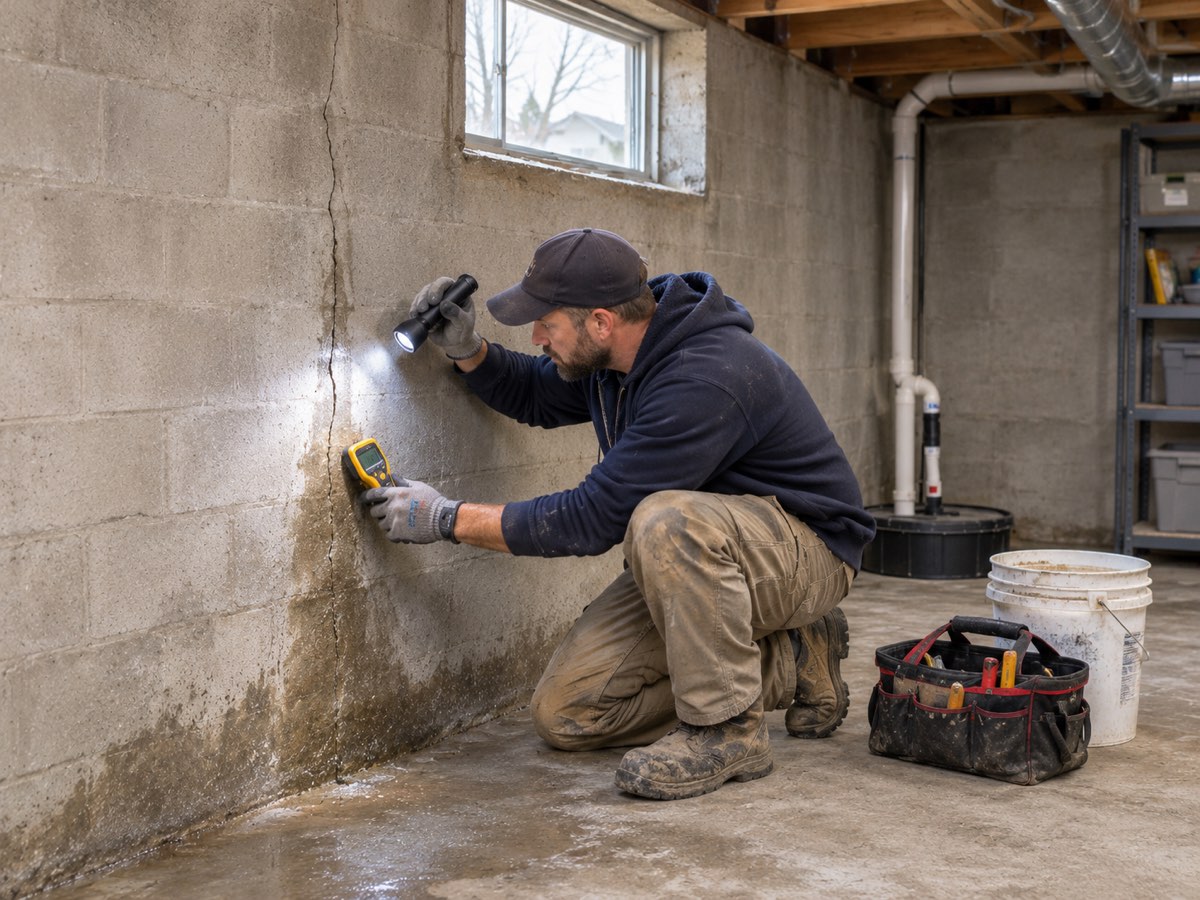
A good inspector asks questions first. Where did you see water, how much, and what was the weather like that week. Then they check outside for gutters, downspouts, grading, and window wells, and inside for cracks, the floor and wall joint, pipe openings, and the sump pit if there is one.
Tools can help. A moisture meter reads dampness behind paneling or drywall, and a hose test can recreate a leak by wetting one area of the yard at a time. When the inspection ends, you should get a plain explanation of where the water enters, why it does, and what repair options fit. Ask for the findings in writing so you have something to compare against any quote.
What Makes One Leak Harder to Find Than Another
Finished basements hide the evidence. Water can travel behind drywall or under flooring and show up several feet from where it entered, so the wet spot you see may not be the entry point.
Leaks that come and go take more patience, since the conditions that cause them have to be present. Homes with more than one source, like a cracked wall plus a short downspout, need each cause sorted out so the repair addresses all of them. Before the visit, move stored items away from the walls and write down when you last saw water.
Signs it is time to call
- Water on the floor after heavy rain or snowmelt
- Damp patches or dark stains on walls and carpet edges
- White powder on concrete or block
- A musty smell that lingers in the basement
- Peeling paint or bubbling wall coatings
Basement Leak Inspection questions
How can I tell if it's a leak or just condensation?
Tape a square of aluminum foil tight to the wall and check it the next day. Moisture on the room side of the foil points to condensation. Moisture under the foil points to water coming through the wall.
Should I patch or paint before the inspection?
Hold off. Sealer and paint cover the stains and marks an inspector uses to trace the water. Move belongings away from the walls and leave the damage as it is.
Can an inspection find leaks in a finished basement?
Yes. A moisture meter can read behind paneling or drywall, and staining, swollen trim, and smell help narrow the area. Sometimes a small section of wall has to be opened to confirm the source.
Other services
Basement Leak Inspection near you
Ready when you are
Call Basement Waterproofing Gibsonburg to set up a basement leak inspection and find out where your water is getting in. You'll get a clear explanation of the cause and the repair options for your Gibsonburg home.
Call (419) 548-8305