Exterior Drainage for Gibsonburg, OH Homes
Most basement water starts outside. Rain runs off the roof, lands next to the foundation, and soaks into the soil along the wall until it finds a crack, a joint, or a porous block.
Exterior drainage in Gibsonburg gives that water somewhere else to go. Sandusky County is flat, and much of northwest Ohio sits on clay-heavy ground that drains slowly, so water can sit against a foundation after a hard rain or a spring thaw. The longer it sits, the more pressure it puts on the wall, and the more likely it is to find a way in.
Signs Your Gibsonburg Home Needs Exterior Drainage Work
Puddles that sit beside the house for a day or more after rain point to a drainage problem. So do downspouts that dump water within a few feet of the wall, and soil that slopes toward the foundation instead of away from it. Inside, the same problem shows up as damp spots along the base of a wall, white mineral crust on block or concrete, and a musty smell that gets stronger after storms.
Timing helps you read the clues. If the basement stays dry for weeks and then leaks during a heavy rain or a fast snowmelt, water is probably piling up outside and pushing in. A leak that shows up in every season may be groundwater, and that calls for a different fix.
What the Exterior Drainage Job Involves
A good provider starts with a walk around the house. They look at gutters, downspout outlets, the slope of the ground, window wells, and any low spot where water collects. Then they match the fix to what they find.
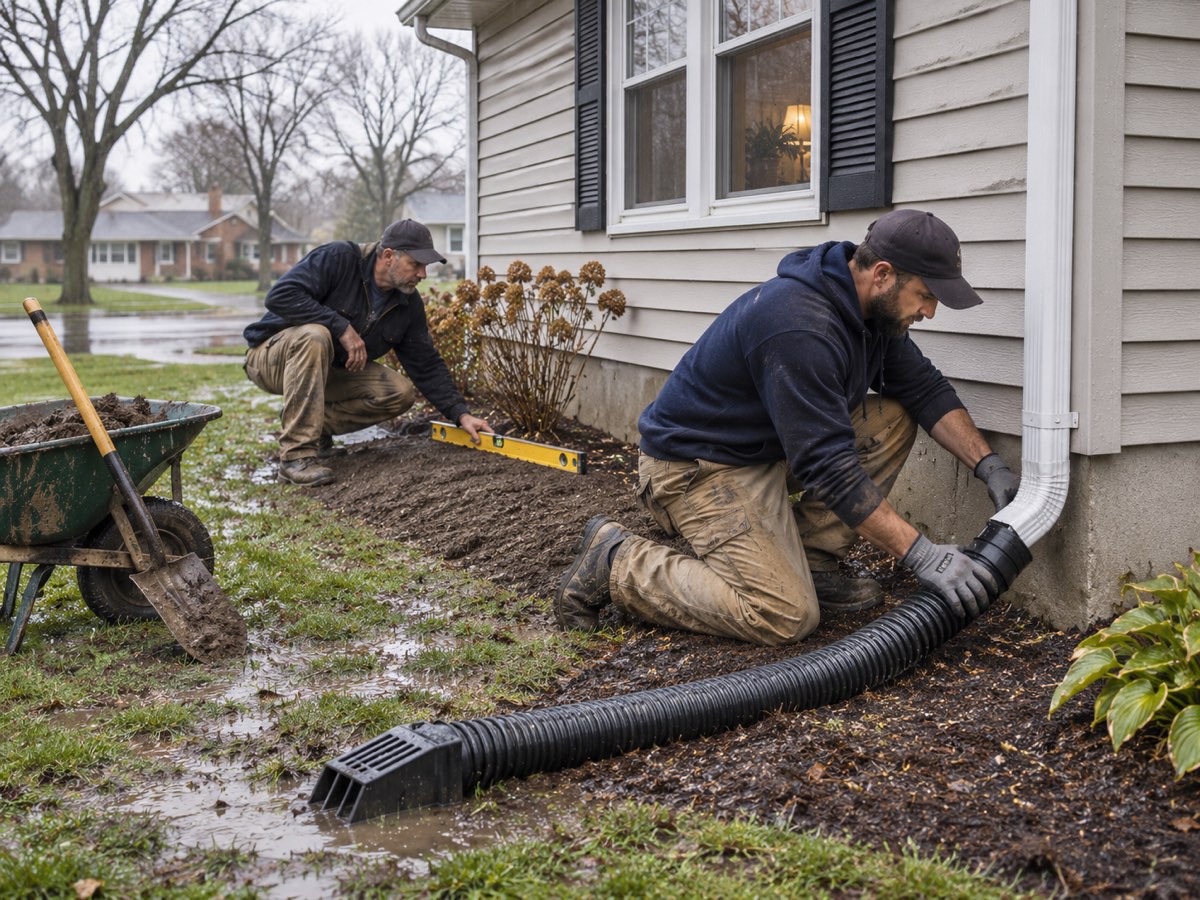
Simple jobs include extending downspouts, piping them to an outlet well away from the house, and regrading soil so it falls away from the wall. Window wells may need cleaning, new gravel, or a drain at the bottom. On harder jobs, a crew may dig down along the foundation, seal the exposed wall, and lay perforated drain pipe in gravel at the footing. That pipe carries water to a sump pit or to a spot in the yard where it can drain off.
What Shapes the Scope of an Exterior Drainage Project
The size of the problem sets the size of the job. Moving a downspout takes an afternoon. Digging out a full wall of foundation takes days and heavy equipment, and it means working around porches and landscaping.
Basement depth matters, since a deep wall takes more excavation than a shallow one. So does the place the water can go. A lot with room to slope away from the house gives you easy options, while a tight lot may need buried pipe to a sump pit or a lower part of the yard. Ask for a written scope that spells out each step, so you can compare quotes line by line.
Signs it is time to call
- Puddles that sit beside the foundation after rain
- Downspouts that empty within a few feet of the wall
- Soil that slopes toward the house
- Damp or stained block along the bottom of basement walls
- Water that shows up only after heavy rain or snowmelt
Exterior Drainage questions
Can exterior drainage alone stop my basement from leaking?
Sometimes. If surface water is the cause, moving it away from the house can end the leak. If water is rising through the floor or pushing through cracks from groundwater pressure, you may need interior drainage or a sump pump as well. An inspection sorts out which case you have.
Is gutter work part of exterior drainage?
In most cases, yes. Clogged gutters overflow right at the foundation, and short downspouts drop water in the same place. Cleaning, repairing, and extending them is one of the cheapest fixes there is.
When is the best time to do this work in Gibsonburg?
Dry ground makes digging easier, so late spring through fall suits excavation. Downspout and grading fixes can go in sooner. Frozen winter ground slows deep digging, so plan bigger jobs ahead if you can.
Other services
Exterior Drainage near you
Ready when you are
Call Basement Waterproofing Gibsonburg to talk through where the water around your home is going. We'll help you sort out whether you need a simple downspout change or a deeper drain job in Gibsonburg.
Call (419) 548-8305