Interior Waterproofing in Gibsonburg, Ohio
Water gets into a basement in Gibsonburg the same way it does across northwest Ohio. The ground around the house fills up after heavy rain or a spring thaw, and the pressure pushes water through the floor joint, the walls, or small cracks. Interior waterproofing deals with that water once it's inside the foundation, so it can't spread across your floor.
A good interior system collects the water at the base of the wall, carries it to a sump basin, and pumps it out and away from the house. It's a common fix when digging up the outside of the home isn't practical, such as when a deck or a tight lot line is in the way. If you're seeing damp spots or a musty smell, call and talk it through with a pro who can look at the basement in person.
Signs Your Gibsonburg Basement Needs Interior Waterproofing
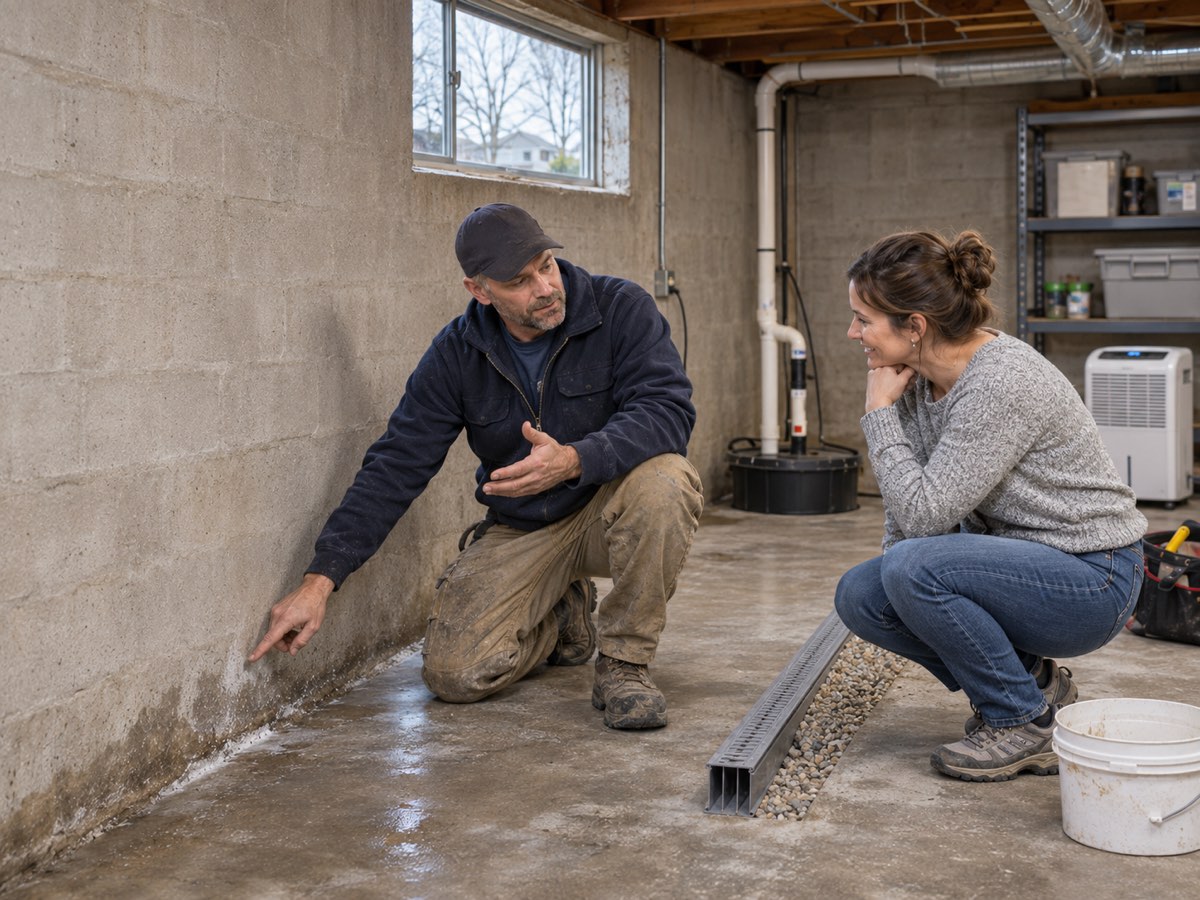
Water along the edge where the floor meets the wall is the classic early sign. That joint is a weak point in most poured and block foundations, and hydrostatic pressure (water pushing against the foundation from the soil) finds it first. You may see dark stains, a thin film of water after a storm, or puddles that show up and disappear within a day or two.
The walls tell the story too. White, chalky mineral deposits called efflorescence mean moisture is moving through the concrete or block and leaving salts behind. Peeling paint and bubbling wall coatings point the same direction.
A musty odor that lingers even with a dehumidifier running means moisture is coming from somewhere. Mold tends to follow, and stored boxes and carpet are the first things to suffer. Catching the problem early keeps a damp basement from turning into a ruined one.
What the Interior Waterproofing Job Involves
The work starts with finding where the water enters. A pro looks at the walls, the floor joint, any cracks, the downspouts and grading outside, and the spots where water shows up after rain. Treating the wrong spot is a quick way to end up with a basement that stays wet.
A typical system starts with a channel opened in the floor along the inside of the wall, which means breaking out a strip of concrete. A perforated drain pipe goes into a bed of gravel, and the pipe slopes toward a sump basin set into the floor. Concrete goes back over the trench once the drain is in place. Some systems also add a wall barrier that steers seepage down into the drain.
The sump pump sits in that basin and pushes water out through a discharge line to a spot away from the foundation. A good install checks that the line slopes downhill and doesn't dump next to the house. Expect dust and noise while the concrete is cut, and ask how long your basement layout will take.
Factors That Shape an Interior Drain Project
Price follows the footage of drain and the shape of the basement. A single wet wall takes less trenching than a full perimeter, so a pro measures how many linear feet of floor have to be opened. Poured concrete and block walls behave differently too, since block walls have hollow cores that may need to drain into the system.
Finishing matters. A bare basement is easy to reach, while framed walls or built-in storage along the wall add work before the drain can go in. Ask the contractor how they'll handle finished surfaces, and get the answer in writing.
The pump and discharge setup can change the scope as well. A battery backup or a long discharge run to reach good drainage adds parts and labor. Gutters that dump at the foundation or soil that slopes toward the house can overload any interior system, so a good provider checks them and tells you what to fix.
Signs it is time to call
- Water along the edge where the floor meets the wall
- White, chalky deposits on block or concrete walls
- A musty smell that returns after cleaning
- Peeling paint or bubbling wall coatings
- Puddles after heavy rain or a spring thaw
Interior Waterproofing questions
Will interior waterproofing keep water out of my basement walls?
It collects water that reaches the base of the wall and sends it to a sump pump, so the floor stays dry. Walls can still get damp when the soil is saturated, since the water enters the foundation and gets drained from the inside. If wall dampness bothers you, a pro may also look at exterior fixes such as grading and gutters.
Can interior waterproofing be done in a finished basement?
In many cases, yes. The finished floor and wall along the affected side may need to be opened to reach the drain path. Ask how the pro plans to handle trim and drywall before work starts.
How do I know if I need interior drains or only a sump pump?
If water shows up at one low spot, a sump pit may handle it. If it seeps in along the wall or floor joint in several places, a drain channel leading to the pit moves it to the pump more evenly. An in-person look tells you which setup fits your basement.
Other services
Interior Waterproofing near you
Ready when you are
If water keeps showing up in your basement, call Basement Waterproofing Gibsonburg and describe what you're seeing. We'll talk through whether interior waterproofing fits your Gibsonburg home.
Call (419) 548-8305